B2B conversion
Conversion rate optimization for B2B sites
How B2B sites in the US and Germany lose demo requests at the form. Fix fields, trust, CTAs, speed, and mobile before you buy more traffic.

TL;DR
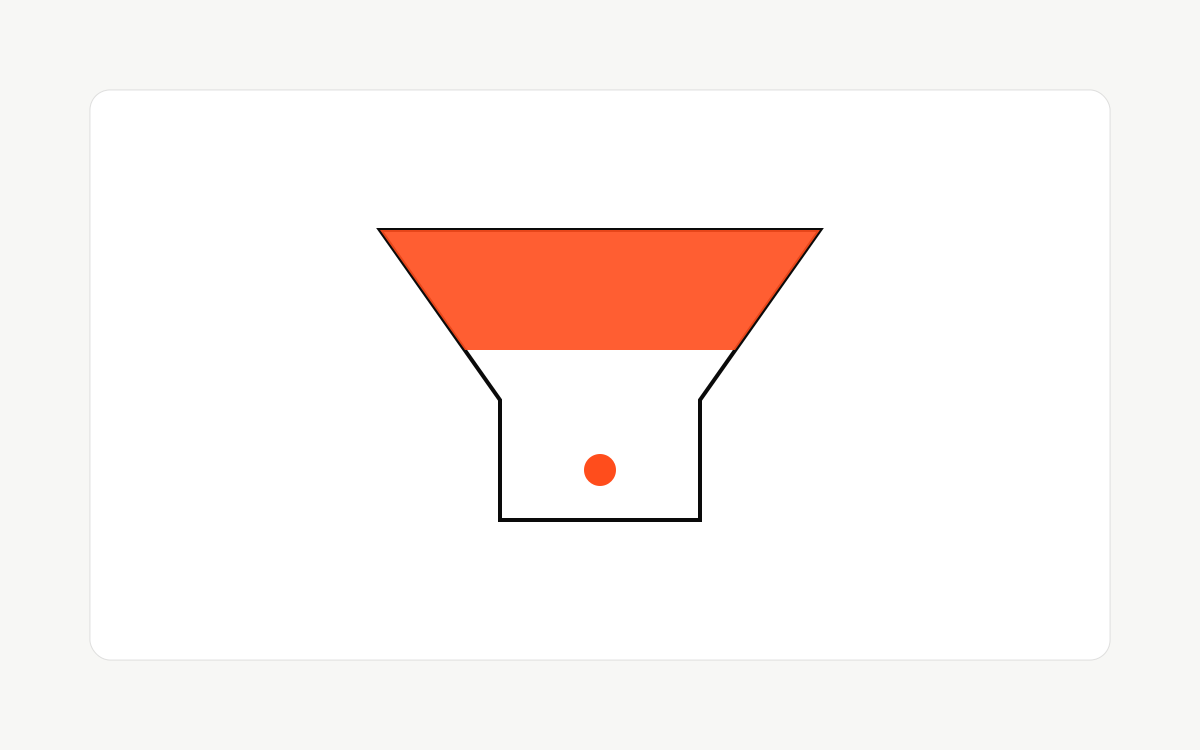
- B2B conversion rate optimization is usually a form and trust problem. Traffic alone rarely fixes abandonment. Buyers already interested abandon when fields feel invasive, CTAs are vague, or the page is slow on mobile.
- Work in this order: cut non-essential fields, clarify the primary CTA, place trust at the decision point, fix mobile friction, then improve speed on the money pages.
- Field reduction is a directional planning aid: moving from eight-plus fields to three or four often lifts completion rates materially. Exact lifts vary by offer, traffic source, and industry. Measure your own funnel before claiming a percentage.
- US and German B2B buyers share the same friction patterns. German buyers often need clearer privacy language near the email field; US buyers often need clearer next-step timing (“reply in one business day”).
- See our conversion optimization approach and conversion improvement engagements.
B2B is different
You are not selling a cart. You are selling a next conversation.
Ecommerce CRO optimises for purchase. B2B CRO optimises for a qualified next step: demo request, pricing call, audit booking, or a shortform “talk to sales.” The buyer is often evaluating risk for their company. Colour choice is rarely the decision. That changes what “conversion” means and where friction shows up.
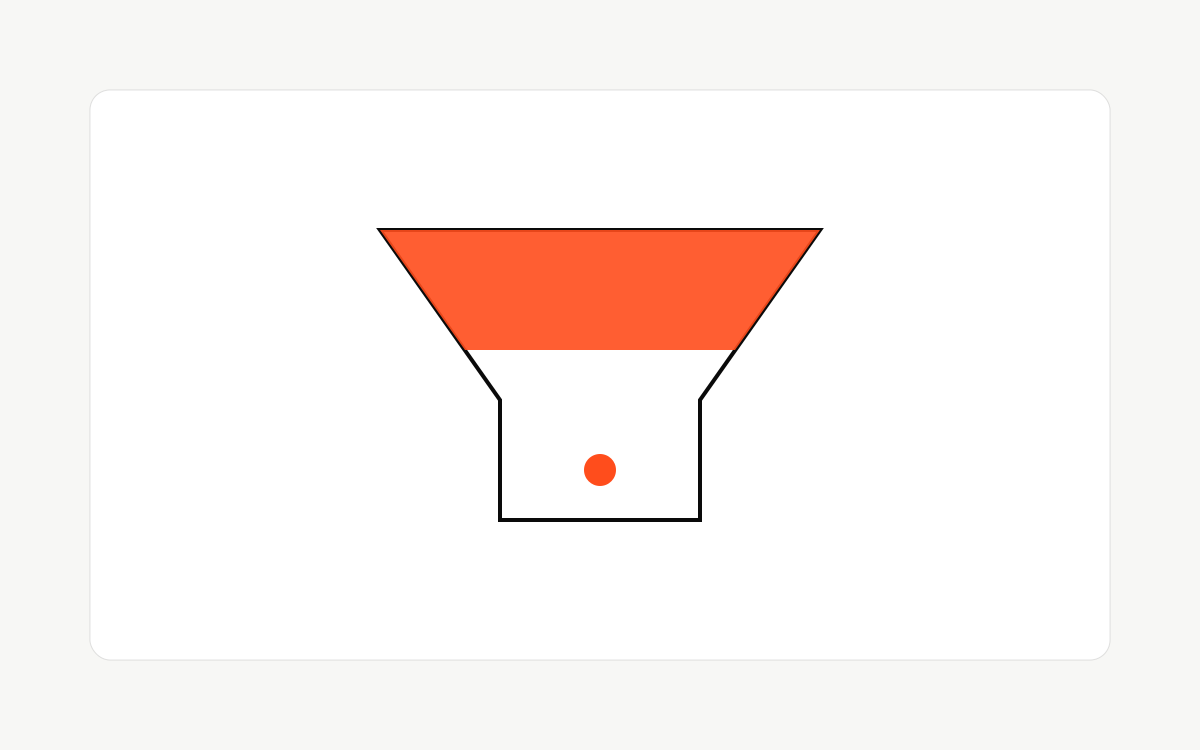
The highest-intent moment is the form. A visitor who clicked “Book a call” has already said yes to a conversation. Every extra field, unclear privacy line, or slow mobile keyboard is a reason to leave after they decided to act. Fixing that moment recovers demand you already paid to attract.
US mid-market and German Mittelstand buyers behave similarly here. Both abandon long forms. Both need a clear owner and timeline after submit. Privacy wording and legal tone differ by market; the fix pattern does not.
The visitor who starts your form is the most expensive person on the site. That is where most B2B sites lose them.
Five levers
Where B2B conversion work pays first.
01
Form fields
Ask only what you need to start the conversation. Name, work email, and one qualifier (company or use case) is enough for many demo forms. Company size, phone, budget, and “how did you hear about us” can wait for the first call. Directionally, cutting a long form down to three or four fields often improves completion; treat any published “+X%” claim as a hypothesis to test on your traffic.
02
Trust at the decision point
Put proof where doubt spikes: next to the submit button. A short privacy line, a real customer logo, a clear reply window, or a one-line result beats a footer full of badges. In Germany, a clear note on how the email will be used (and that it will not be sold) often matters as much as a case study. In the US, response-time clarity (“we reply within one business day”) reduces hesitation.
03
CTA clarity
One primary action per page. “Book a 20-minute scoping call” converts better than “Learn more” or “Submit.” Match the CTA to the offer on the page. If the page sells an audit, the button should book the audit. Avoid opening a generic contact form with twelve unrelated fields.
04
Speed on money pages
Slow landing pages and form pages tax every campaign. Aim for a mobile LCP that feels instant on the pages that receive paid and organic traffic. Image weight, third-party scripts, and chat widgets are the usual culprits. Speed work is conversion work when the page is a lead path.
05
Mobile completion
Open the form on a real phone. Check keyboard types, tap targets, sticky headers covering the submit button, and validation that wipes fields. Many B2B buyers research on desktop and convert on mobile between meetings. If mobile fails, your “desktop conversion rate” hides the leak.
Directional benchmarks
Useful ranges for B2B lead forms. Treat them as planning aids.
| Signal | Directional range | How to use it |
|---|---|---|
| Form field count | 3 to 5 fields for a first step | Treat 8+ fields as a red flag unless you sell a high-friction regulated offer that truly needs them upfront. |
| Landing page → form start | Wide range by traffic quality | Compare like-for-like sources. Paid cold traffic starts fewer forms than branded search. Fix the page before blaming the channel. |
| Form start → submit | Often the biggest leak | Instrument step events. If starts are healthy and submits are weak, the form UX is the product problem. |
| Mobile vs desktop submit rate | Mobile often worse | If mobile submit rate is far below desktop, fix keyboard, tap targets, and layout shift before rewriting copy. |
US and Germany
Same friction. Slightly different trust language.
A US SaaS buyer and a German operations lead both abandon a form that asks for budget before a conversation. Both need to know what happens after submit. The copy that reassures them differs: US pages often lead with speed and calendar clarity; German pages often need explicit purpose limitation near the email field and a sober tone that matches how the company sells offline.
Do not run a separate CRO philosophy per country. Run the same measurement and fix order, then localise privacy lines, proof, and CTA wording. Multilingual sites should test the form in each language. Do not assume the English layout survives translation length.
Fix order
What to change this week, in sequence.
✓
Export form analytics for 30 days: views, starts, submits, by device.
✓
List every field and delete or defer anything not required for the first reply.
✓
Rewrite the primary CTA to name the next step and the time commitment.
✓
Add one trust line at the submit button (privacy or response time).
✓
Complete the form on a real phone and fix the first three frictions you hit.
✓
Measure again for two weeks before changing the offer or buying more ads.
Next step
Instrument the funnel, then change one thing at a time.
CRO without step-level measurement becomes opinion. Tag form view, start, and submit. Change one lever (fields, CTA, or trust line), hold traffic steady, and read the result. That discipline beats a redesign that ships twelve changes and no learning.
If you want a structured pass on the lead path, start with conversion optimization or a focused conversion improvements engagement. For form-specific leaks, also read form and checkout conversion leaks.
Common questions
What B2B teams ask about conversion rate optimization.
What is a good B2B website conversion rate?
There is no single good number. Rates vary by traffic source, offer, and whether “conversion” means newsletter, demo, or pricing request. Use your own baseline by source and device, then chase relative lift. A site converting cold paid traffic at a low single-digit rate can still be healthy if demo quality is high.
Should I use a long form to qualify leads?
Usually not on the first step. Long qualification forms feel efficient for sales and expensive for marketing. Capture a short form, then qualify on the call or with a short follow-up. Exceptions exist in regulated or high-ticket flows where missing data blocks the next step entirely.
Does page speed really affect B2B conversion?
Yes on the pages that receive campaign and search traffic. Slow mobile loads increase abandon before the form appears. Speed will not fix a weak offer, but it stops you from taxing every click you already bought.
How is B2B CRO different in Germany vs the US?
The mechanical fixes are the same: fields, CTA clarity, mobile, speed. Trust copy differs. German buyers often need clearer data-use language near the form. US buyers often need clearer scheduling and response-time expectations. Localise proof and privacy lines; keep the measurement model identical.
Start here
Ready to talk.Send us the brief.
or book a 15-minute call →or email us directly →
Not sure where to start? Send the page, workflow, or backlog causing the problem. We will tell you whether it needs a scope call, a short diagnostic, or a different first step.